


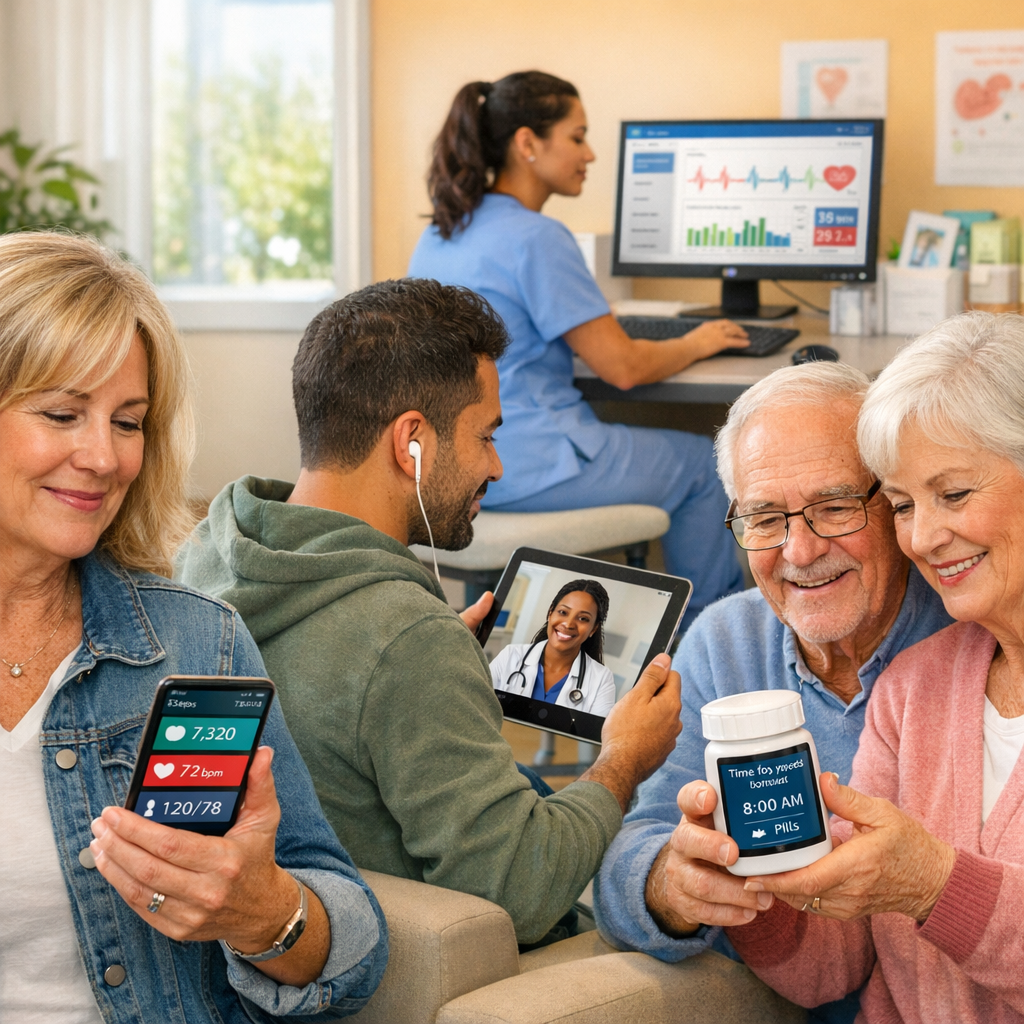
How Digital Health Tools Are Empowering Patients: A 2026 Guide to Patient Digital Health Tools
The relationship between Americans and their healthcare providers has undergone a quiet but profound transformation. The rise of patient digital health tools is fundamentally changing how individuals interact with their own health data, make decisions about treatment, and communicate with the clinicians responsible for their care. No longer passive recipients of medical advice, patients are stepping into a new role as active, informed participants armed with real-time data and direct lines of communication. This guide explores the landscape of these technologies, the benefits driving their rapid adoption, the barriers that remain, and what the future holds for a digitally empowered patient population.
What Are Patient Digital Health Tools? Defining the Landscape
Patient digital health tools encompass a broad and growing category of technologies designed to put health information and management capabilities directly into the hands of individuals. The definition stretches far beyond a single app or device. It includes telemedicine platforms that connect patients with providers through video visits, mobile health applications that track symptoms and medication schedules, wearable devices that continuously monitor vital signs, secure patient portals that provide access to electronic health records, and artificial intelligence-driven chatbots that offer triage guidance and health education.
These tools generally fall into two functional buckets. The first supports acute care needs, such as a telehealth visit for a sudden sinus infection or an online booking platform that eliminates the need for a phone call to schedule an appointment. The second, and arguably more transformative, category supports chronic disease management. Continuous glucose monitors for diabetes, smart inhalers for asthma, connected blood pressure cuffs for hypertension, and digital therapeutics for mental health conditions all represent a shift toward ongoing, data-rich care that happens outside the four walls of a clinic.
The regulatory framework around these technologies is maturing alongside the tools themselves. The U.S. Food and Drug Administration plays a central role through its Digital Health Center of Excellence, which oversees software as a medical device (SaMD) and artificial intelligence-enabled devices. A notable development on the horizon is the FDA’s TEMPO pilot program, set to launch in 2026, which aims to expand Medicare beneficiary access to digital health devices for chronic disease management by linking coverage to the CMMI ACCESS model. This signals a federal acknowledgment that software and sensors are becoming as critical to treatment as pharmaceuticals.
Academic research is catching up with industry momentum. A 2023 narrative review published on PMC and indexed by NCBI analyzed 71 out of 1,722 articles specifically focused on patient perspectives regarding digital health tools. The review identified patient empowerment, self-management capability, and personalization as the primary drivers of adoption. Meanwhile, a 2022 study from the American Medical Association found that 68 percent of patients were more likely to choose a healthcare provider who offered online booking capabilities. The message is clear: patients are not just using these tools; they are making care decisions based on their availability.
The Core Benefits: Why Patients Are Adopting Digital Tools
Convenience and Access: The Telehealth Boom
The single most dramatic shift in patient behavior over the past five years has been the mass adoption of telehealth. According to McKinsey research, telehealth usage increased 38-fold from pre-2020 levels. During the height of the pandemic, 80 percent of patients reported using virtual visits, a figure documented by the AMA and cited in analyses from Osmosis. While utilization has stabilized since its peak, it remains a permanent fixture of the American healthcare delivery model.
The value proposition for patients is straightforward. Virtual visits eliminate travel time, reduce the need to take full or half days off work, and dramatically lower no-show rates. For patients in rural counties where a specialist may be a three-hour drive away, telehealth transforms access from a logistical ordeal into a lunch-break appointment. The same holds true for elderly patients with mobility limitations, parents of young children, and individuals managing multiple chronic conditions that require frequent check-ins. The convenience factor is not a luxury; for many, it is the difference between receiving care and forgoing it.
Proactive Self-Management and Prevention
Perhaps the most underappreciated shift enabled by patient digital health tools is the move from reactive to preventive care. In a traditional model, a patient notices symptoms, schedules an appointment, and receives a diagnosis and treatment plan. In a digitally enabled model, a wearable device detects an irregular heart rhythm before the patient feels a single palpitation. A continuous glucose monitor alerts a person with diabetes to a dangerous overnight blood sugar trend, allowing for immediate intervention rather than a crisis days later.
The economic impact of this shift is substantial. According to data from PhRMA citing IQVIA research, the use of digital health apps and wearables for preventive healthcare saves the U.S. healthcare system an estimated $7 billion per year, driven primarily by reduced hospitalizations. For the individual patient, this translates to fewer emergency room visits, shorter hospital stays, and a greater sense of control over conditions that once felt unpredictable. Patients can now track metrics like blood pressure, glucose levels, heart rate variability, and physical activity and share that data with their providers in real time, creating a continuous feedback loop rather than a snapshot taken once every six months in a doctor’s office.
Personalized Care and Data-Driven Decisions
The third major benefit is the personalization of treatment plans through data and artificial intelligence. When a clinician has access to months of a patient’s sleep, activity, and physiological data rather than a single set of vital signs, the resulting clinical decisions are inherently more tailored. According to data cited by Osmosis, 40 percent of providers plan to adopt augmented intelligence tools to assist with diagnosis and treatment planning. These systems analyze patient data to identify patterns that might escape human review, flagging early warning signs of conditions ranging from sepsis to depression.
Patients are also turning to AI directly. The same Osmosis data set found that 52 percent of patients already use chatbots to acquire health information. These tools range from simple symptom checkers to sophisticated conversational agents that help patients understand lab results, prepare for procedures, or manage medication side effects. When designed well, they reduce the anxiety of uncertainty and free up clinical staff to focus on complex cases.
A unique insight from the PMC narrative review highlights the importance of participatory design in this space. When patients are involved in the development of digital health tools from the start, the resulting products are more usable, more relevant to real-world needs, and more likely to achieve sustained adoption. This approach bridges the persistent gap between what engineers build and what patients actually need, moving beyond assumptions to create tools that fit into the messy reality of daily life with a chronic condition.
Key Categories of Patient Digital Health Tools
The universe of patient digital health tools can be organized into several distinct categories, each serving a different function in the care journey.
Remote monitoring devices represent one of the fastest-growing segments. Data shows that 30 percent of clinicians were already using these tools as of recent surveys. Examples include connected blood pressure cuffs that automatically transmit readings to a patient’s chart, continuous glucose monitors that eliminate the need for fingersticks, and smart pill bottles that track medication adherence and send reminders when a dose is missed. These devices answer a direct People Also Ask question about Internet of Things applications in healthcare, with five clear examples being smart inhalers, connected glucometers, wearable ECG monitors, smart pill bottles, and remote patient monitoring sensors used in hospital-at-home programs.
Mobile health apps cover an enormous range of functions, from medication reminders and symptom trackers to full-featured mental health platforms that deliver cognitive behavioral therapy through a smartphone interface. These apps are often the entry point for patients new to digital health, as they require no additional hardware beyond a device most Americans already carry.
AI-powered chatbots and triage tools have moved from novelty to mainstream utility. With 52 percent of patients using them for health information, these tools now serve as a first line of inquiry, helping patients determine whether a symptom warrants an emergency room visit, an urgent care trip, or home management. For healthcare organizations, they reduce the administrative burden on front desk staff and call centers.
Patient portals integrated with electronic health record systems provide secure messaging with providers, access to lab results, prescription refill requests, and appointment scheduling. While not as flashy as AI or wearables, portals remain the digital backbone of patient-provider communication and are often the tool patients interact with most frequently.
Digital therapeutics, or DTx, represent the most regulated category. These are FDA-approved software applications designed to treat specific medical conditions, such as insomnia, substance use disorder, or attention deficit hyperactivity disorder. Unlike general wellness apps, digital therapeutics must demonstrate clinical efficacy through trials and are often prescribed by a physician.
Overcoming Barriers to Adoption: The Equity and Usability Gap
For all the promise of patient digital health tools, significant barriers prevent equitable access and sustained use. The digital divide remains the most persistent challenge. Older adults, low-income households, and rural communities face overlapping obstacles: lack of reliable broadband internet, limited digital literacy, and the cost of devices. A patient who cannot afford a smartphone data plan or who lives in a county with spotty cellular coverage is effectively locked out of the digital health revolution, widening existing health disparities rather than narrowing them.
Privacy and security concerns weigh heavily on patient willingness to share health data. High-profile data breaches in the healthcare sector have eroded trust, and patients rightly worry about who has access to information collected by apps and wearables. While HIPAA provides protections for data handled by covered entities, many consumer health apps fall outside its scope, leaving data in a regulatory gray area that many patients do not fully understand.
Interoperability issues create a fragmented experience that undermines the value of these tools. Many wearable devices and standalone apps do not sync with the electronic health record systems used by hospitals and clinics. A patient may diligently track their blood pressure for months, only to find that their physician cannot easily import that data into their official medical record. The result is a parallel health record maintained by the patient that the healthcare system cannot fully utilize.
Out-of-pocket costs represent a gap in coverage that deserves more attention. While the $7 billion in system-wide savings is frequently cited, little discussion focuses on what patients themselves pay. Premium health apps often require monthly subscription fees. Wearable devices can cost hundreds of dollars upfront. Insurance coverage for these tools is inconsistent, leaving patients to weigh the health benefits against their household budgets. For a patient managing a chronic condition on a fixed income, a $15 monthly app subscription may be a genuine financial decision point.
Provider burnout is the final barrier worth addressing. The same tools that empower patients can overwhelm clinicians. Alert fatigue from remote monitoring systems, the administrative burden of reviewing patient-generated data, and the expectation of rapid responses to portal messages all contribute to the cognitive load on healthcare professionals. A tool designed to improve care can paradoxically degrade it if the implementation does not account for the human on the other end of the data stream.
The Role of Digital Health Tools in Clinical Trials and Drug Development
Beyond direct patient care, digital health technologies are reshaping how new treatments are tested and brought to market. In the context of clinical trials, DHT stands for Digital Health Technology, and it refers to tools like wearable sensors, mobile apps, and electronic patient-reported outcome platforms used to collect data from trial participants.
The pharmaceutical industry, represented by PhRMA, has been a strong advocate for integrating these tools into drug development. Wearables can serve as digital endpoints, capturing real-world data on mobility, sleep quality, or cardiac function that complement traditional lab tests and clinician assessments. Remote participation options, including e-consent and virtual check-ins, make clinical trials more accessible to patients who cannot travel to major academic medical centers. This has direct implications for patient diversity and retention, two persistent challenges in clinical research. The FDA’s Digital Health Center of Excellence provides regulatory oversight for these tools when they are used as medical devices in a research context, ensuring that the data they generate meets the evidentiary standards required for drug approval.
Future Trends Shaping Patient Digital Health Tools
Several developments on the horizon will further shape the landscape. The 40 percent of providers planning to adopt augmented intelligence signals a coming wave of clinical decision support tools that will analyze patient-generated data alongside medical imaging, lab results, and genetic information to predict disease onset and recommend personalized interventions.
The TEMPO pilot program launching in 2026 represents a policy inflection point. By linking digital health device access for chronic disease management to Medicare coverage through the CMMI ACCESS model, the FDA and Centers for Medicare and Medicaid Innovation are testing a framework that could establish reimbursement pathways for tools that have long existed in a coverage gray zone.
The expansion of digital health tools beyond traditional healthcare settings is another trend to watch. Insurers are integrating wellness apps into their plans, employers are offering wearable-based incentive programs, and even banks and retailers are exploring digital health platforms as part of customer loyalty and wellness initiatives. This multi-industry adoption, highlighted by the health engagement platform dacadoo, suggests that the line between healthcare and daily life will continue to blur.
Finally, participatory design is gaining traction as a standard practice rather than a niche approach. Patients are being brought into the development process early, co-creating tools that reflect their lived experience, language preferences, and cultural context. The result is technology that patients actually want to use, which is the foundational requirement for any tool that aims to improve health outcomes.
Frequently Asked Questions
What are some patient digital health tools?
Patient digital health tools include telehealth platforms for virtual visits, wearable devices like smartwatches and continuous glucose monitors, mobile health apps for symptom tracking and medication reminders, patient portals for accessing lab results and messaging providers, and remote monitoring devices such as connected blood pressure cuffs and smart pill bottles.
What are 5 examples of IoT used in healthcare?
Five examples of Internet of Things devices used in healthcare are smart inhalers that track medication use for asthma patients, connected glucometers that transmit blood sugar readings to providers, wearable ECG monitors that detect irregular heart rhythms, smart pill bottles that track adherence and send reminders, and remote patient monitoring sensors used in hospital-at-home programs to track vital signs continuously.
What are the 5 C's of healthcare?
The 5 C's of healthcare are Communication, Coordination, Collaboration, Continuity, and Compassion. These principles guide patient-centered care delivery, and digital health tools can support each one: secure messaging improves communication, shared care plans enable coordination, integrated records facilitate collaboration across specialties, longitudinal data supports continuity, and tools that respect patient preferences demonstrate compassion.
What is DHT in clinical trials?
DHT stands for Digital Health Technology in the context of clinical trials. It refers to tools such as wearable sensors, mobile apps, and electronic patient-reported outcome platforms that collect data directly from trial participants. These technologies can serve as digital endpoints, enable remote trial participation, and improve patient diversity and retention by reducing the burden of travel and in-person visits.
The Empowered Patient Is Here
The data tells a compelling story. Telehealth usage has grown 38-fold. Patients using digital tools for prevention are helping save the healthcare system $7 billion annually. More than two-thirds of patients now factor digital access into their choice of provider. The shift from passive patient to active participant is not a distant future; it is the current reality of American healthcare.
For healthcare organizations, the question is no longer whether to offer patient digital health tools, but how to implement them in ways that are equitable, interoperable, and sustainable for both patients and clinicians. The facilities that get this right will attract and retain the growing population of digitally empowered patients. Those that do not risk being left behind.
Is your facility ready to support these empowered patients? Healthcare Staffing Plus connects you with skilled professionals who understand digital health workflows and can help your team deliver the technology-enabled care patients now expect. Contact us today to learn more.