


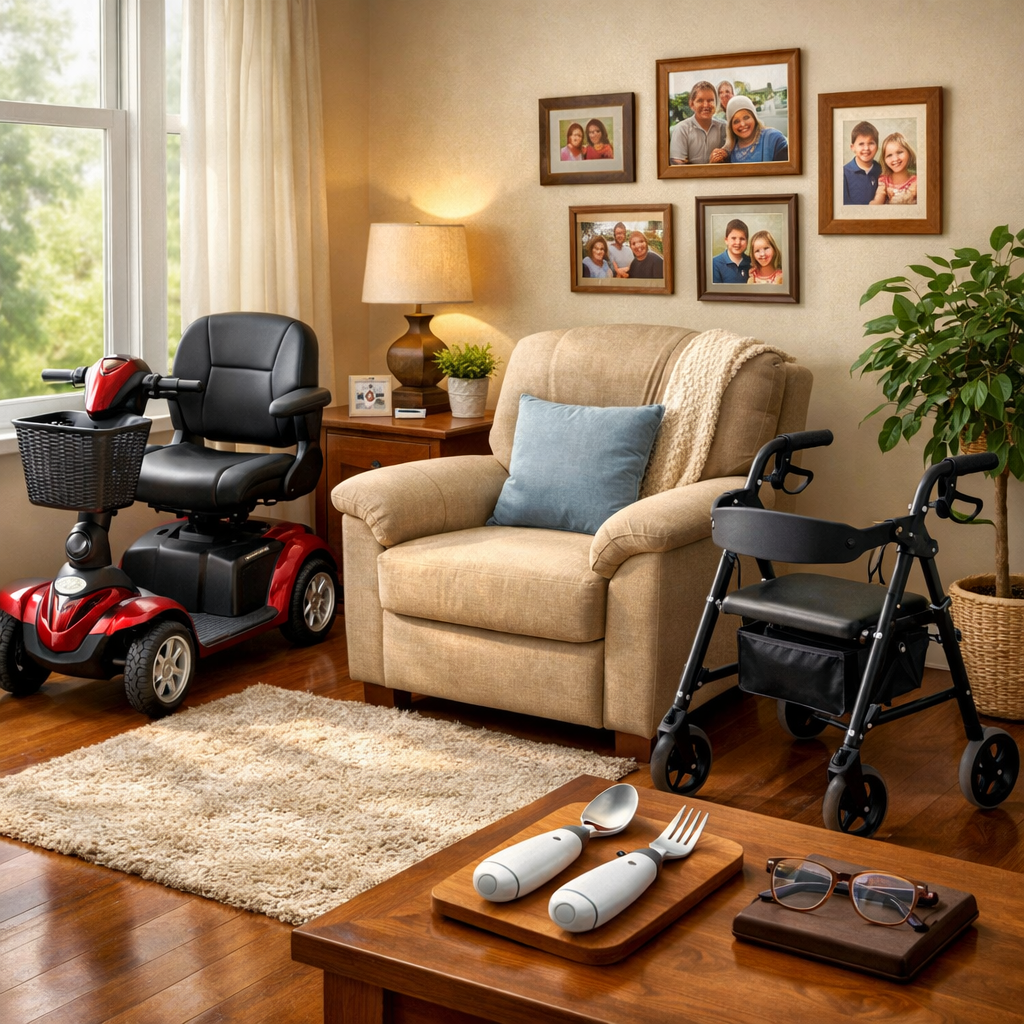
The Ultimate Guide to Senior Healthcare Mobility: How Mobility Aids Help Seniors Maintain Independence in 2026
When it comes to senior healthcare mobility, the goal isn’t just moving from point A to point B. It’s about preserving dignity, protecting physical health, and maintaining the freedom to live life on one’s own terms. For millions of older adults across the United States, mobility aids have become the bridge between giving up cherished routines and continuing to thrive at home, in the community, and with family.
This guide cuts through the noise of product catalogs and conflicting advice to deliver a clear, practical look at the modern mobility landscape. Whether you are a senior planning for the future, a family caregiver researching options, or a healthcare professional seeking to support your patients, you will find actionable insights here. We cover everything from basic canes to the wearable robotics redefining what’s possible in 2026, along with the financial pathways that make these tools accessible.
Why Mobility Independence Matters for Seniors
The ability to move freely is woven into every aspect of a fulfilling life. When that ability fades, the consequences reach far beyond the physical. Seniors who struggle with walking often withdraw from social activities, skip medical appointments, and avoid leaving the house altogether. Over time, this isolation feeds depression and accelerates cognitive decline. A mobility aid, chosen correctly, reverses that spiral. It becomes a tool of autonomy, not a symbol of frailty.
For family and professional caregivers, the right equipment transforms daily routines. Transferring a loved one from bed to chair without a lift places enormous strain on the back, shoulders, and knees. Patient lifts, transfer boards, and properly fitted walkers reduce that physical burden dramatically, lowering injury rates among home health aides and nursing staff. This is a critical consideration for organizations like Healthcare Staffing Plus, where workforce safety and patient dignity go hand in hand.
Fall prevention alone justifies the investment. Research indicates that a properly fitted cane can reduce minor falls by up to 30 percent. When you consider that falls remain the leading cause of injury-related emergency room visits among older adults, that statistic represents thousands of avoided fractures, hospital stays, and rehab stints. In 2026, with smart sensors and automatic braking systems entering the mainstream, the safety net is wider than ever. There has never been a better moment to explore what modern senior healthcare mobility can offer.
Types of Mobility Aids and How to Choose the Right One
The market offers a dizzying array of devices, but they all fall into a few core categories. The key is matching the tool to the specific deficit, whether that’s balance, strength, endurance, or a combination of all three.
Canes and Walkers: Entry-Level Support
Canes serve a narrow but vital purpose. They are designed for people who have minor balance issues or one-sided weakness and who can still bear weight through their legs. A standard single-point cane works for mild instability. A quad cane, with its four-pronged base, provides more stability for those who need it. The critical factor is fit. A cane that is too tall forces the shoulder up and throws off posture. One that is too short causes the user to lean, increasing fall risk. The top of the cane handle should align with the crease of the wrist when the arm hangs naturally at the side.
Walkers and rollators step in when balance deficits are more pronounced or when fatigue sets in quickly. A standard walker without wheels offers maximum stability but requires the user to lift it with each step, which can be tiring. Rollators, with their three or four wheels, hand brakes, and built-in seats, suit those who can walk but need frequent rests. Modern rollators now feature automatic braking that engages when the user releases the handles, a safety innovation that prevents the device from rolling away on slopes. If you need support on stairs, a cane is often the better choice. If you tire easily and need to sit down frequently, choose a rollator with a padded seat and a storage basket.
Wheelchairs and Mobility Scooters: Power and Range
Manual wheelchairs remain the go-to for individuals who cannot walk or bear weight but have sufficient upper body strength to propel themselves. They are compact, maneuverable indoors, and relatively affordable. Transport chairs, a lighter variant with smaller wheels, require a caregiver to push and are ideal for medical appointments and short outings.
Power wheelchairs and mobility scooters represent the next tier of independence. The distinction matters. Scooters are steered with a tiller and are designed primarily for outdoor use, covering longer distances on sidewalks, in grocery stores, and around neighborhoods. In 2026, premium scooter models now achieve up to 50 miles on a single charge, a battery breakthrough that enables full-day outings without range anxiety. Power wheelchairs, controlled by a joystick, offer tighter turning radii and are better suited for indoor navigation. Many now come equipped with GPS tracking and obstacle detection sensors that alert the user to curbs, stairs, and walls.
Before purchasing either, measure every doorway, hallway, and turning space in the home. A power chair that cannot fit through the bathroom door or navigate the kitchen creates daily frustration. Also factor in transport. Scooters often require a vehicle lift or ramp, while some power chairs disassemble for trunk storage.
Transfer Aids and Adaptive Equipment: Daily Living
Mobility isn’t only about walking. It’s about getting out of bed, using the bathroom safely, and eating without assistance. Transfer aids fill this often-overlooked gap. Patient lifts, whether hydraulic or electric, allow a caregiver to move someone from bed to wheelchair without manual lifting. Transfer boards provide a smooth sliding surface for those with some upper body strength. Bed rails and grab bars around toilets and showers prevent the sudden shifts in balance that lead to falls.
Two niche devices deserve special attention because they address problems that generic guides often miss. The first is Liftware, a line of electronically stabilized eating utensils. For seniors with hand tremors from Parkinson’s disease or essential tremor, these spoons and forks counteract shaking in real time, allowing a person to eat independently without spilling. The second is the Stair Steady handle, a sliding grip that attaches to a wall-mounted rail along a staircase. It gives users a secure handhold that moves with them as they ascend or descend, making multi-level homes navigable again without a stairlift.
For caregivers, these tools are not luxuries. They are injury-prevention equipment. A single improper lift can end a nursing career. Facilities that invest in transfer aids protect their staff and improve patient outcomes.
The Latest Innovations in Senior Healthcare Mobility in 2026
The mobility aid industry is undergoing a quiet revolution. Incremental improvements in battery life and frame materials have given way to genuinely transformative technologies that redefine what it means to age in place.
Smart walkers and rollators now incorporate voice-activated controls, allowing users to adjust handle height or engage brakes without letting go. Fall detection sensors built into the frame can automatically alert a caregiver’s phone if the device tips over or if the user’s gait pattern suddenly changes. Some models sync with smart home systems, turning on hallway lights as the user approaches or unlocking the front door for a visiting home health aide.
The most striking advancement is the emergence of wearable exoskeletons for seniors. Once confined to rehabilitation hospitals and military applications, these robotic suits are becoming lighter, more affordable, and user-friendly enough for home use. A lower-body exoskeleton can provide powered assistance at the hips and knees, helping someone with severe muscle weakness stand from a chair and walk across a room. While still a significant investment, the technology is on a trajectory toward broader accessibility, and early adopters report life-changing gains in mobility.
Virtual and augmented reality programs are also entering the senior healthcare mobility space. Used alongside traditional aids, VR headsets guide users through balance exercises and simulated walking scenarios. A senior recovering from a hip fracture can practice navigating a virtual grocery store while safely seated or supported, rebuilding confidence before venturing out. These programs are not replacements for physical therapy but powerful adjuncts that improve adherence and outcomes.
Battery technology deserves its own mention. The 50-mile range now standard on high-end scooters eliminates the constant worry about being stranded. Faster charging times and lighter lithium-ion packs make power mobility more practical for daily use. Combined with obstacle detection and GPS, these scooters give families peace of mind when a loved one heads out alone.
Financial Access: Does Medicare Cover Mobility Aids?
The cost of mobility equipment can be intimidating, but multiple funding sources exist. Understanding them is essential to avoiding unnecessary out-of-pocket spending.
Medicare Part B covers durable medical equipment, or DME, which includes canes, walkers, manual wheelchairs, power wheelchairs, and scooters. The key phrase is “medically necessary.” A physician must document that the device is required to perform activities of daily living within the home and must prescribe it as part of a treatment plan. Medicare will then cover 80 percent of the approved amount after the annual Part B deductible is met. The beneficiary or a secondary insurance plan covers the remaining 20 percent. Medicare does not cover bathroom grab bars, shower chairs, stairlifts, or adaptive utensils like Liftware, as these are not classified as DME.
Medicare Advantage plans, offered by private insurers, sometimes include additional allowances. Some plans provide a quarterly over-the-counter benefit that can be used toward certain mobility aids or safety equipment. Check the plan’s evidence of coverage document for specifics.
For those who cannot afford the copays or who need items Medicare excludes, several other pathways exist. Medicaid programs in many states offer more generous DME coverage, though eligibility and benefits vary widely. The Department of Veterans Affairs provides mobility equipment to eligible veterans, often at no cost. Local Area Agencies on Aging maintain lists of grant programs and charitable organizations that assist with equipment purchases.
Free and low-cost equipment is available through donation and recycling programs. The Senior Resource Association, for example, accepts gently used walkers, rollators, wheelchairs, canes, crutches, and bed rails for redistribution to eligible seniors. They do not accept hospital beds, mobility scooters, oxygen tanks, CPAP machines, or Hoyer lifts. Similar programs operate in communities across the country. Before buying new, search for a medical equipment loan closet near you.
Out-of-pocket costs vary widely, and no single price guide captures the market accurately. A basic cane might cost twenty dollars, while a high-end power wheelchair can exceed five thousand. The most reliable approach is to obtain a professional assessment, secure a prescription, and then call multiple local suppliers for quotes. Ask about warranty coverage, return policies, and whether the supplier handles Medicare billing directly.
Common Mistakes to Avoid When Choosing a Mobility Aid
Even the best device fails if it’s not matched to the user and the environment. Avoid these frequent missteps.
Buying without a professional assessment tops the list. A physical therapist or occupational therapist can evaluate gait, strength, balance, and home layout to recommend the specific device and fit. A cane that is too short or a walker set at the wrong height increases fall risk rather than reducing it. The 30 percent reduction in falls cited earlier depends entirely on proper fitting.
Ignoring home layout leads to expensive equipment gathering dust. A mobility scooter is useless in a home with narrow hallways and tight corners. A stair glide requires a staircase of sufficient width and structural support. Before purchasing, walk through the home with measurements and consider how the user will navigate the bathroom, kitchen, and entryways.
Overlooking maintenance shortens equipment lifespan and creates safety hazards. Batteries degrade over two to three years and need replacement. Brake cables stretch and require adjustment. Tires wear down and lose traction. Plan for a device lifespan of roughly two to five years for daily-use items, with regular servicing along the way. A rollator with squeaky brakes or a wheelchair with a sluggish battery is a fall waiting to happen.
Assuming one size fits all ignores the reality that different medical conditions demand different features. A person with arthritis needs easy-grip handles and lightweight frames. Someone with Parkinson’s benefits from weighted utensils and walkers with laser cueing to overcome freezing gait. A post-surgical patient recovering from a hip replacement has entirely different weight-bearing restrictions than someone with chronic neuropathy. The device must fit the diagnosis, not just the age.
Frequently Asked Questions
What is the new mobility device for seniors in 2026?
Smart walkers with automatic braking and fall detection represent the biggest leap in everyday aids. More notably, wearable exoskeletons are transitioning from clinical settings to home use, offering powered assistance for standing and walking. Virtual reality balance training programs are also gaining traction as a supplement to traditional physical therapy.
Does Medicare pay for mobility devices?
Yes, Medicare Part B covers durable medical equipment including walkers, wheelchairs, and scooters when a physician documents medical necessity. The beneficiary typically pays 20 percent of the Medicare-approved amount after meeting the annual deductible. Bathroom modifications and adaptive utensils are not covered.
Can seniors get a free mobility scooter?
Yes, through several channels. Medicare and Medicaid may cover the full cost if eligibility criteria are met. The VA provides scooters to qualifying veterans. Numerous charities and local equipment loan programs also offer free or heavily subsidized devices. The process requires a doctor’s prescription and, in many cases, a prior authorization submission.
At what age do most people lose their mobility?
There is no single age, but the risk of mobility loss increases significantly after 65 due to age-related muscle loss, arthritis, and chronic conditions like diabetes and heart disease. The decline is often gradual. Early intervention with strength training, balance exercises, and appropriate mobility aids can slow or prevent severe impairment.
Taking the Next Step Toward Independence
Mobility aids are not a sign of decline. They are a gateway to continued activity, social connection, and safety. Whether the need is a simple cane for added confidence or a power wheelchair that opens up the world again, the right device restores what aging and illness threaten to take away.
The first step is a conversation with a healthcare provider who can assess current function and prescribe the appropriate equipment. From there, explore funding options, test devices in person, and insist on a proper fitting. Whether you are a senior planning ahead or a caregiver seeking resources, understanding your options is the foundation of independence. For professional staffing support in senior care settings, Healthcare Staffing Plus connects facilities with trained professionals who understand the critical role mobility plays in quality of life.